The difference between a story that is read and one that is remembered lies in its internal architecture. Many writers obsess over plot mechanics while neglecting the thematic soul of the work. To create an immersive experience, you must know how to deliver emotional impact by acting as both an architect and a gardener. You must design a solid structure while allowing your characters the organic space to grow and breathe.
True creative power involves making the strange feel familiar and the mundane feel mysterious. Whether you are drafting a space epic or a character study, your goal is to bypass the reader’s intellectual defenses. By mastering how to deliver emotional impact, you can transform a simple manuscript into a living experience. This guide explores four proven techniques to ensure your story resonates long after the final page is turned.
The Valley Of Quiet
After a high-octane climax or a devastating loss, you might feel tempted to keep the heart racing. However, true resonance requires a valley of quiet. By slowing the tempo, you allow characters to sit in the silence of their aftermath. This gives your readers the necessary space to process the weight of recent events.
In The Lord of the Rings, the silence following Gandalf’s fall in Moria is more deafening than the battle itself. We see the hobbits collapsed in grief without any dialogue to distract from the loss. This beat ensures the audience feels the vacuum left by the mentor before the journey continues. Do not rush to the next chapter; let the dust settle first.
Pacing is not just about the speed of your prose; it is about the strategic use of silence. By creating valleys of quiet, you ensure that the emotional consequences of your plot have the room to land and resonate with the reader before the next conflict begins.
The Emotional Foil
We do not measure tragedy by the event itself, but by the gap between what is and what could have been. To make an emotional moment land with full force, you must use a foil. This is a contrast of extreme joy or mundane normalcy. This technique highlights the tragedy by showing the reader exactly what the character has lost.
The opening of Up is a masterclass in this technique. We are not merely told Carl is lonely; we see decades of a vibrant, shared life in a “Married Life” montage. By the time the screen fades to Carl sitting alone in a muted room, the silence is heartbreaking. The pain is physical because we still have the memory of the music and laughter in our minds.
To maximize the impact of a character’s low point, you must first establish a vibrant, lived-in baseline of what they value most. The deeper the joy or normalcy you depict early on, the sharper and more physical the pain becomes when that reality is stripped away.
Sensory Anchors
Sometimes, a character’s internal monologue is not enough to carry the weight of their grief. This is where Sensory Anchors become essential. By tethering an emotional state to a mundane physical object, you create a shorthand for the reader. When that object is damaged or lost, the reader experiences a visceral reaction that words alone cannot trigger.
In Cast Away, Wilson the volleyball is more than just equipment; he is Chuck’s social connection personified. When Wilson drifts away, we are not crying over a ball—we are mourning the loss of a friend. By imbuing a simple object with years of emotional history, the film creates one of the most devastating deaths in cinema history. This is a primary tool for those learning how to deliver emotional impact without over-explaining.
Externalize internal turmoil by giving your characters physical objects to hold their heaviest emotions. This turns abstract, invisible feelings into a tangible, high-stakes loss that the reader can actually “see” and mourn alongside the protagonist.
Intellectual vs Emotional Pacing
There is a significant difference between a character understanding a truth and actually feeling it. While intellectual pacing is fast, emotional pacing acts as a delayed fuse. Often, a character will use logic, humor, or denial to protect themselves from a painful realization. Your job is to apply pressure until those intellectual defenses finally shatter.
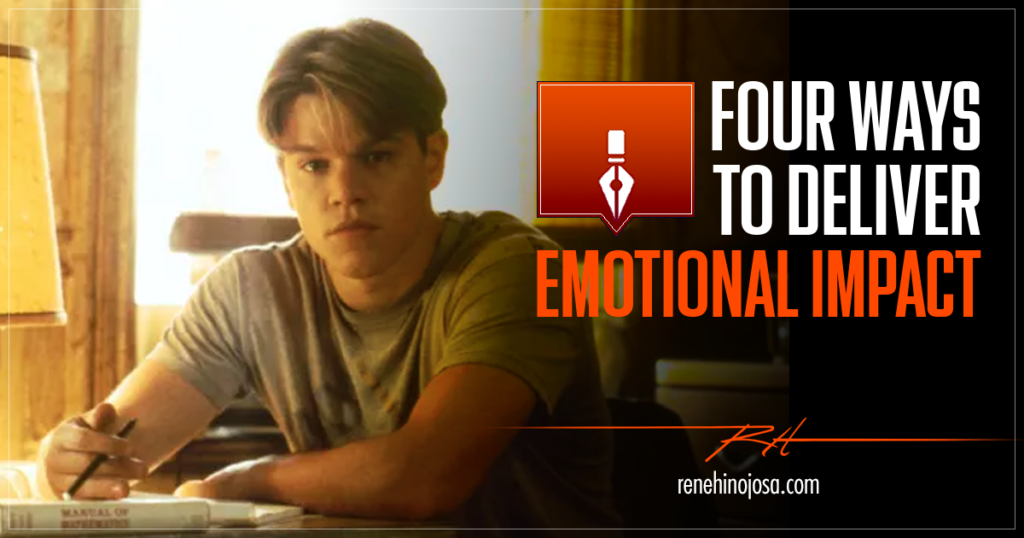
In Good Will Hunting, Will logically knows he was a victim, but he has not emotionally accepted forgiveness. Sean repeats the phrase “It’s not your fault” until it finally bypasses Will’s sarcasm and hits his heart. This repetition forces an emotional breakthrough to happen on screen, turning a clinical fact into a life-changing moment.
Avoid letting your characters accept a life-altering truth the moment they hear it. Force them to hide behind their intellect, sarcasm, or denial until the relentless pressure of the truth makes their emotional defenses impossible to maintain.
Summing It Up
Writing is ultimately a process of excavation. We use our pens as compasses to discover what we truly believe about the world and our capacity for resilience. By balancing technical pacing with emotional vulnerability, you move beyond the “mechanics” of craft into the realm of true storytelling. Your job is not just to show the reader your world—it is to make them feel why it matters.
Until next time,